

Insurance
IRDAI’s Big Message: Focus on Actual Claim Payouts, Not Just Claim Settlement Ratios

FinSetu Editorial Team
Finance & Insurance Editorial Desk Published: Recent 9 min read
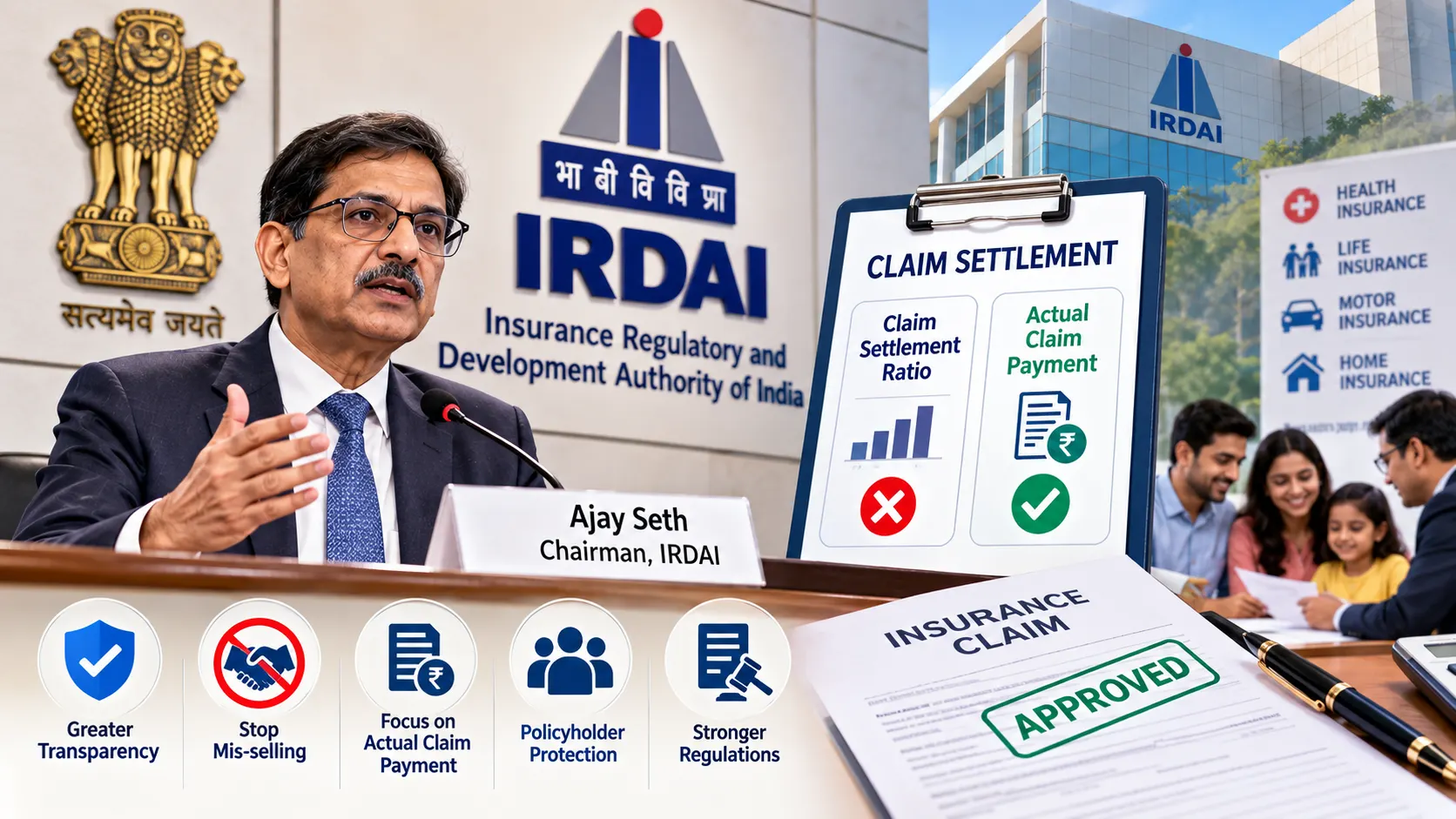
IRDAI's Big Message: Look Beyond Claim Settlement Ratio and Focus on Actual Claim Payments
IRDAI Claim Payment Rules: When purchasing an insurance policy, customers often compare insurance companies based on their Claim Settlement Ratio (CSR). However, IRDAI Chairman Ajay Seth has highlighted an important issue for the insurance sector: knowing how many claims an insurer settles is important, but customers should also understand how much money is actually paid against those claims. In October 2026, discussions around health insurance claims, medical billing, mis-selling and insurance distribution costs have once again brought policyholder interests into focus. IRDAI has indicated plans to introduce a consultation paper on issues related to health insurance claims and hospital billing practices. The regulator is also considering proposed reforms related to commissions and distribution costs.Key Highlights of IRDAI's Message
- Look beyond CSR: Consider the actual amount paid in claims, not just the number settled.
- Health insurance: Focus on medical billing, treatment costs and the reasons behind claim disputes.
- Prevent mis-selling: Customers should receive accurate information about policy benefits, exclusions and limitations.
- Analyse complaints: Examine the causes of complaints and the quality of resolution, not just complaint numbers.
- Proposed reforms: Improve transparency and accountability in commissions and insurance distribution costs.
What Is the Claim Settlement Ratio?
The Claim Settlement Ratio, or CSR, generally indicates the proportion of claims settled by an insurance company during a specified period. However, the calculation method and definition may differ across reports. Customers should therefore check the methodology used in the relevant report. For example, if an insurer settles 98 out of 100 claims, its claim settlement ratio by number may be 98%. But this does not automatically mean that the insurer paid the full amount requested in all 98 claims. Some claims may be partially paid, while others may involve disputes or deductions. This is why a high CSR alone should not determine an insurance purchase. Policyholders should also consider the amount paid against claims, claim processing timelines, policy conditions and whether the coverage suits their needs.Why Are Actual Claim Payments Important?
The purpose of insurance is to provide financial protection during unexpected events, illnesses or other covered losses. If a customer receives a much smaller amount than expected, even after a claim is approved, it becomes important to understand the actual level of financial protection provided by the policy. IRDAI Chairman Ajay Seth has previously highlighted the difference between a high claim settlement ratio by number and the proportion of the total claim amount actually paid. This issue is not just about whether a claim is approved. It is also about payment adequacy, policy conditions and transparency throughout the claims process. Partial payments can occur for several reasons, including co-payment clauses, deductibles, room-rent limits, sub-limits, exclusions or differences between hospital bills and policy terms. Therefore, every partial payment should not automatically be treated as incorrect. Insurers should clearly explain the basis for deductions under the applicable policy provisions.What Is IRDAI Planning for Health Insurance Claims and Medical Billing?
According to a Financial Express report published on October 16, 2026, IRDAI Chairman Ajay Seth said the regulator was planning a new consultation paper to improve healthcare billing practices and health insurance claim settlement. Understanding treatment costs, healthcare utilisation, fraud and hospital processes will be important parts of this effort. The initiative aims to better understand the reasons behind claim disputes and improve coordination between insurers and healthcare providers. Differences between hospital bills and policy conditions can create difficulties for customers. Transparent billing, clear documentation and timely decisions could help address some of these issues. Seth has also emphasised that health insurance complaints should not be assessed only by their total number. Regulators and insurers need to examine the underlying causes, resolution time, recurring issues and cases that are reopened after an initial decision.Efforts to Prevent Insurance Mis-selling
Mis-selling occurs when customers are not given accurate information about a policy's benefits, risks, conditions or limitations. For example, promising a benefit that is not included in the policy or selling an unsuitable product without understanding the customer's needs can create financial difficulties later. IRDAI is considering proposed reforms related to commissions and insurance distribution costs to improve the balance between sales incentives and customer interests. Consultation proposals issued in September 2026 discussed commission limits for life, health and general insurance across products and distribution channels. Insurance distribution involves more than selling a policy. It also includes assessing customer needs, explaining the product, completing documentation, providing policy servicing and maintaining customer relationships. Discussions about commissions and distribution costs must therefore also consider service quality and the value customers receive. Important: These commission changes are part of consultation and proposed reforms. They should not be treated as final rules already applicable to every insurer. The final provisions and effective dates must be confirmed through official IRDAI notifications.What Should Customers Check Besides CSR?
When choosing an insurance company, customers should review policy terms and other claim-related indicators rather than relying on a single number. The following points are particularly important when purchasing health insurance:- Claim payment information: Where available, examine data on the amount paid in claims as well as the number settled. Check the reporting period and methodology.
- Room-rent limits: Understand room eligibility and the possible deductions associated with it.
- Co-payment and deductibles: Check how much of the treatment cost you may have to pay yourself.
- Waiting periods: Review waiting periods for pre-existing diseases and specified treatments.
- Exclusions and sub-limits: Understand the situations in which coverage may be restricted or unavailable.
- Cashless hospital network: Confirm whether your preferred hospitals are part of the insurer's network.
- Claims and complaints process: Understand how to contact the insurer, which documents are required and how to escalate a complaint.
What Should Policyholders Do If They Receive a Lower Claim Payment?
If an insurer pays less than expected or rejects a claim, the first step is to review the settlement letter and payment statement carefully. The reason may relate to a policy condition, missing documentation or a billing dispute.- Ask the insurer for the claim settlement statement and written reasons for deductions.
- Compare the explanation with the policy terms, hospital bills, discharge summary and other documents.
- If something appears incorrect or unclear, file a complaint with the insurer's internal grievance redressal officer.
- Keep the complaint reference number, emails and supporting documents safely.
- If the issue remains unresolved, consider approaching IRDAI's grievance channels or the Insurance Ombudsman, subject to the applicable eligibility and procedure.
What Could These Developments Mean for Customers?
IRDAI's discussions suggest that insurance performance should be assessed not only through sales and settlement figures, but also through the quality of protection and service provided to customers. Greater attention to actual health insurance payments, medical billing and the root causes of complaints could create opportunities to improve transparency. However, a consultation paper or regulatory statement does not mean that all claim-related problems will disappear immediately. The actual impact will depend on the final form of proposed rules, how insurers implement them and whether complaint resolution improves.Frequently Asked Questions (FAQs)
1. What does the Claim Settlement Ratio indicate?
It indicates the proportion of claims settled by an insurer during a specified period. The calculation method may vary across reports, so customers should check the definition used.2. Does a 98% CSR mean the insurer pays 98% of the claim amount?
No. The proportion of claims settled by number and the proportion of the total claim amount paid are different indicators. A high CSR does not guarantee full payment of every claim.3. Which health insurance issues is IRDAI focusing on?
The regulator is focusing on actual claim payments, medical billing, treatment costs, the causes of complaints and transparency in the claims process.4. Has IRDAI implemented new commission rules?
Proposed reforms concerning commissions and distribution costs were part of consultation discussions in September 2026. The final rules and effective dates should be verified through official notifications.5. Where can customers complain about a low claim payment?
Customers should first contact the insurer's grievance redressal officer. If the matter remains unresolved, they may approach IRDAI's grievance channels or the Insurance Ombudsman, subject to the applicable process.6. What should customers check besides CSR when buying health insurance?
Review coverage, room-rent limits, co-payment, deductibles, waiting periods, exclusions, network hospitals and the claims process.Conclusion
IRDAI Chairman Ajay Seth's message is important for insurance customers: do not choose a policy based only on its Claim Settlement Ratio. Consider the actual amount paid in claims, policy conditions, claim processing time and complaint resolution as well. The proposed discussions on medical billing and health insurance claims, along with efforts to review insurance distribution costs, aim to strengthen policyholder interests. However, customers should distinguish proposed reforms from final rules and follow official notifications for confirmed changes. Reading policy documents carefully and comparing coverage before buying remain essential steps towards better financial protection.Disclaimer: This article is for general information only and does not constitute individual insurance advice. Claim payments depend on policy terms, supporting documents and applicable regulations. In case of a dispute, request a written explanation from the insurer and follow the official grievance process.
Interactive Insurance Decision Tool
Family Health Floater Premium Calculator
Estimate family floater health insurance premiums based on age band, sum insured (₹5L–₹1Cr), room rent capping, and restored cover.
Transparent Methodology & Inputs
- Base sum insured levels calibrated for tier-1 & tier-2 hospital networks
- No Claim Bonus (NCB) calculation assumes 10–50% annual step-up without claims
- Pre-existing disease (PED) waiting periods assume standard 24–36 month terms
Limitation: Calculated figures represent indicative premiums. Final policy underwriting quotes are issued directly by IRDAI registered insurers.Official Citation: Insurance Regulatory and Development Authority of India (IRDAI)
#irdai#insurancenews#claimsettlement#claimpayouts#policyholderprotection#insurancereforms#healthinsurance#insuranceupdates#claimpayment#policyholderrights#insuranceawareness