

e₹ क्या UPI से आगे की अगली डिजिटल क्रांति है? जानिए Digital Rupee में क्या है खास

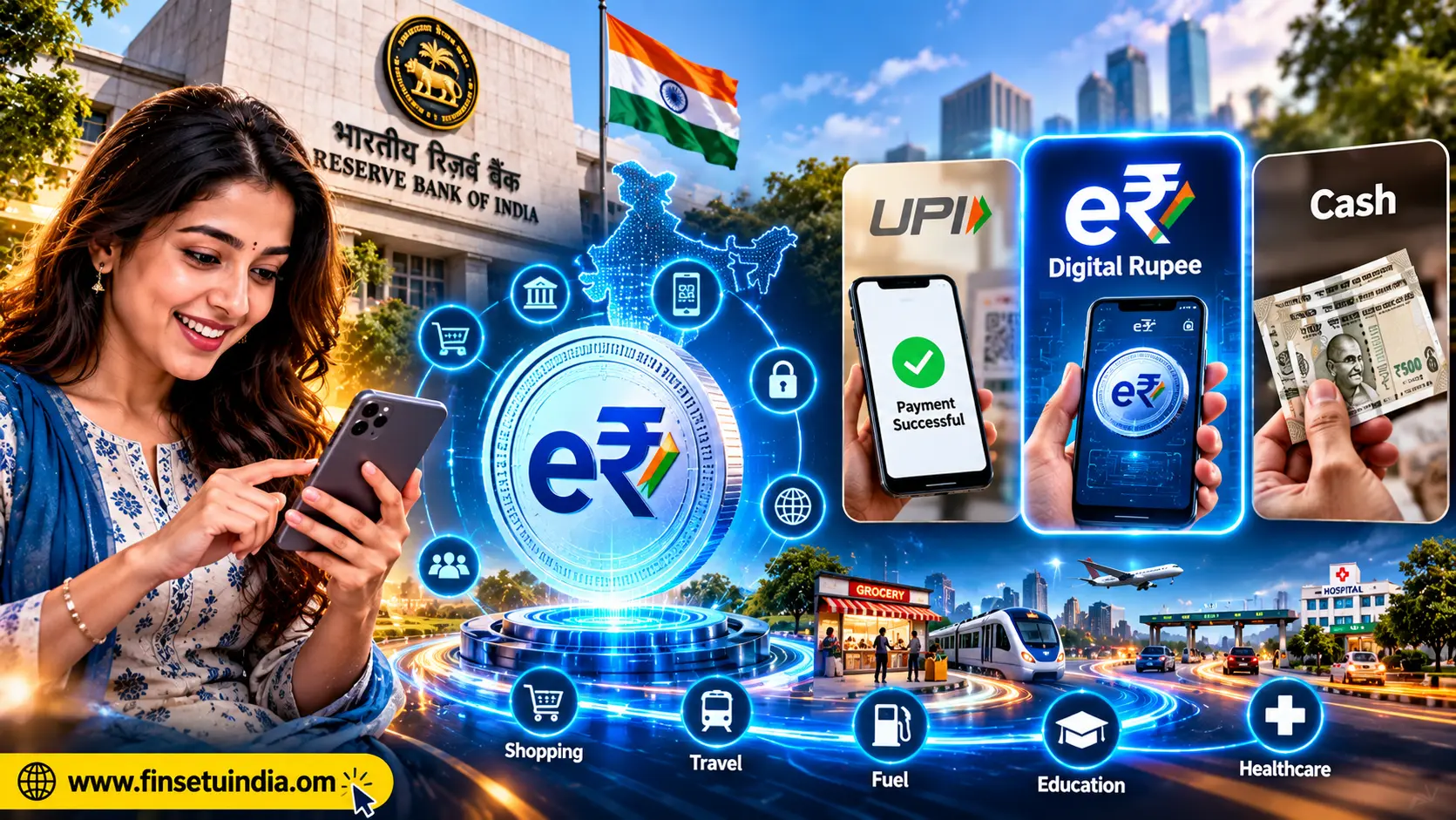
e₹ Digital Rupee भारत की Central Bank Digital Currency (CBDC) है। यह सिर्फ एक ऑनलाइन पेमेंट सुविधा नहीं, बल्कि Reserve Bank of India (RBI) द्वारा जारी डिजिटल कानूनी मुद्रा है। जानिए e₹, UPI और Cash में क्या अंतर है और Digital Rupee भविष्य में कैसे बदल सकता है।
e₹ Digital Rupee: क्या है और क्यों चर्चा में है?
e₹ Digital Rupee भारत की Central Bank Digital Currency यानी CBDC है, जिसे Reserve Bank of India जारी करता है। आसान भाषा में इसे भारतीय रुपये का डिजिटल रूप समझा जा सकता है।
जैसे आपकी जेब में ₹500 का नोट होता है, उसी तरह e₹ को डिजिटल रूप में Digital Rupee Wallet में रखा और इस्तेमाल किया जा सकता है। हालांकि e₹ और सामान्य बैंक बैलेंस एक जैसी चीज नहीं हैं, क्योंकि e₹ सीधे केंद्रीय बैंक द्वारा जारी डिजिटल मुद्रा है।
e₹ और UPI में क्या अंतर है?
भारत में UPI के जरिए करोड़ों लोग रोजाना भुगतान करते हैं। ऐसे में यह सवाल स्वाभाविक है कि जब UPI इतना आसान है तो Digital Rupee की जरूरत क्यों है? इसका जवाब दोनों की मूल प्रकृति में छिपा है।
| आधार | e₹ Digital Rupee | UPI |
|---|---|---|
| क्या है? | Digital Currency | Payment System |
| जारीकर्ता | RBI | Banking Payment Infrastructure |
| पैसा कहां रखा जाता है? | e₹ Wallet | Bank Account |
| Legal Tender | हाँ | UPI स्वयं मुद्रा नहीं है |
| Programmability | संभावित Use Cases | Core Feature नहीं |
क्या e₹ Digital Rupee Legal Tender है?
हाँ। RBI के अनुसार Digital Rupee भारतीय रुपये का डिजिटल रूप है और इसे legal tender का दर्जा प्राप्त है। यह Reserve Bank of India की liability होती है।
e₹ Digital Rupee कैसे काम करता है?
e₹ का इस्तेमाल Digital Rupee Wallet के माध्यम से किया जाता है। Participating banks और eligible non-bank entities के जरिए users को Digital Rupee wallet उपलब्ध कराया जा सकता है।
User अपने बैंक खाते से e₹ wallet में Digital Rupee प्राप्त कर सकता है और फिर इसका इस्तेमाल व्यक्ति या merchant को भुगतान करने के लिए कर सकता है। जरूरत पड़ने पर Digital Rupee को वापस bank account में redeem भी किया जा सकता है।
क्या e₹ से UPI QR Code पर Payment किया जा सकता है?
हाँ। Digital Rupee ecosystem को मौजूदा digital payment infrastructure के साथ interoperable बनाने की दिशा में काम किया गया है।
e₹ application के जरिए eligible UPI QR Code को scan करके merchant payment किया जा सकता है। इससे Digital Rupee को इस्तेमाल करने के लिए हर merchant के लिए पूरी तरह अलग payment infrastructure जरूरी नहीं रह जाता।
क्या e₹ में Offline Payment की सुविधा है?
Digital Rupee की सबसे महत्वपूर्ण संभावनाओं में से एक offline payment है।
RBI ऐसे solutions पर काम और testing कर रहा है जिनका उद्देश्य कम या बिना internet connectivity वाले क्षेत्रों में Digital Rupee transactions को संभव बनाना है।
इसमें अलग-अलग technology solutions जैसे NFC-based transactions और limited connectivity वाले models को explore किया जा रहा है।
e₹ में Programmability क्या है?
Digital Rupee का एक महत्वपूर्ण संभावित feature Programmability है।
इसका मतलब है कि भविष्य में Digital Rupee को कुछ predefined conditions के अनुसार इस्तेमाल करने के लिए program किया जा सकता है। इन conditions में specific purpose, merchant category, geographical location या validity period जैसी शर्तें शामिल हो सकती हैं।
उदाहरण के लिए किसी विशेष सरकारी benefit को केवल निर्धारित उद्देश्य के लिए इस्तेमाल करने योग्य बनाया जा सकता है। इससे targeted government payments और अन्य defined-purpose transactions में Digital Rupee की उपयोगिता बढ़ सकती है।
क्या e₹ Wallet में रखे पैसे पर Interest मिलता है?
नहीं। Digital Rupee wallet balance पर सामान्य savings account की तरह interest नहीं मिलता।
क्या e₹ को Bank Account में वापस बदला जा सकता है?
हाँ। Digital Rupee को bank account से e₹ wallet में लाया जा सकता है और आवश्यकता पड़ने पर e₹ को वापस bank account में redeem किया जा सकता है।
इससे users अपनी जरूरत के अनुसार conventional bank deposits और Digital Rupee के बीच funds का उपयोग कर सकते हैं।
Cash, UPI और e₹ में क्या अंतर है?
| Feature | Cash | UPI | e₹ |
|---|---|---|---|
| Form | Physical | Payment System | Digital Currency |
| Issuer | RBI | Payment Infrastructure | RBI |
| Storage | Physical Wallet | Bank Account | e₹ Wallet |
| Legal Tender | Yes | No, UPI is not currency | Yes |
| Offline Potential | Yes | Separate solutions | Being explored |
| Programmability | No | Not a core feature | Potential |
e₹ Digital Rupee के संभावित फायदे
- RBI द्वारा जारी digital legal tender।
- Digital Rupee Wallet में value रखने की सुविधा।
- Merchant और person-to-person payments के संभावित use cases।
- UPI infrastructure के साथ interoperability।
- Offline payment solutions की संभावना।
- Programmable payments के नए use cases।
- Government benefit distribution में संभावित उपयोग।
- Wholesale financial transactions में संभावित उपयोग।
क्या e₹ UPI को Replace करेगा?
फिलहाल ऐसा कहना सही नहीं होगा कि e₹ आने वाले समय में UPI को पूरी तरह replace कर देगा।
दोनों की भूमिका अलग है। UPI मुख्य रूप से bank-account based digital payment को आसान बनाता है, जबकि e₹ का उद्देश्य Digital Currency को एक अलग monetary form के रूप में उपलब्ध कराना है।
इसलिए भविष्य में दोनों systems एक-दूसरे के alternatives के बजाय अलग-अलग use cases में साथ काम कर सकते हैं।
e₹ का भविष्य किन चीजों पर निर्भर करेगा?
Digital Rupee की long-term success केवल technology पर निर्भर नहीं करेगी। इसके लिए users, merchants, banks और government institutions की adoption भी महत्वपूर्ण होगी।
- User Experience
- Security
- Privacy
- Merchant Acceptance
- Interoperability
- Scalability
- Offline Capability
- Real-world Use Cases
e₹ Digital Rupee: Quick Facts
| Question | Answer |
|---|---|
| e₹ क्या है? | India's Central Bank Digital Currency |
| कौन जारी करता है? | Reserve Bank of India |
| क्या यह Legal Tender है? | हाँ |
| क्या यह UPI है? | नहीं |
| कहां रखा जाता है? | Digital Rupee Wallet |
| क्या Interest मिलता है? | नहीं |
| क्या UPI QR से payment संभव है? | हाँ, interoperable payment options के जरिए |
अक्सर पूछे जाने वाले सवाल (FAQs): e₹ Digital Rupee
e₹ Digital Rupee क्या है?
e₹ भारत की Central Bank Digital Currency यानी CBDC है। यह RBI द्वारा जारी भारतीय रुपये का digital form है।
क्या e₹ और UPI एक ही हैं?
नहीं। e₹ digital currency है, जबकि UPI एक payment mechanism है।
क्या e₹ Legal Tender है?
हाँ। Digital Rupee को legal tender का दर्जा प्राप्त है और यह RBI की liability है।
क्या e₹ Wallet में Interest मिलता है?
नहीं। e₹ wallet balance पर savings account की तरह interest नहीं मिलता।
क्या e₹ से UPI QR पर Payment किया जा सकता है?
हाँ। RBI ने Digital Rupee और existing payment infrastructure के बीच interoperability को सक्षम करने की दिशा में व्यवस्था विकसित की है।
क्या e₹ Offline इस्तेमाल किया जा सकता है?
RBI offline CBDC solutions पर काम और testing कर रहा है, जिनका उद्देश्य कम या बिना internet connectivity वाले क्षेत्रों में Digital Rupee payments को सक्षम करना है।
क्या e₹ UPI को Replace कर देगा?
फिलहाल ऐसा कहना उचित नहीं है। दोनों की भूमिका अलग है और भविष्य में दोनों अलग-अलग use cases के लिए साथ काम कर सकते हैं।
Mutual Fund SIP Compounding Calculator
Calculate future wealth accumulation through monthly Systematic Investment Plans (SIP), CAGR growth rate, and rupee cost averaging.
- Formula: M = P × ({[1 + i]^n - 1} / i) × (1 + i)
- Assumed annual rate of return (e.g. 12% CAGR) is illustrative based on historical index trends
- Does not account for exit loads or short-term capital gains tax (STCG) variations